
Nations, Kingdoms, and Civilizations

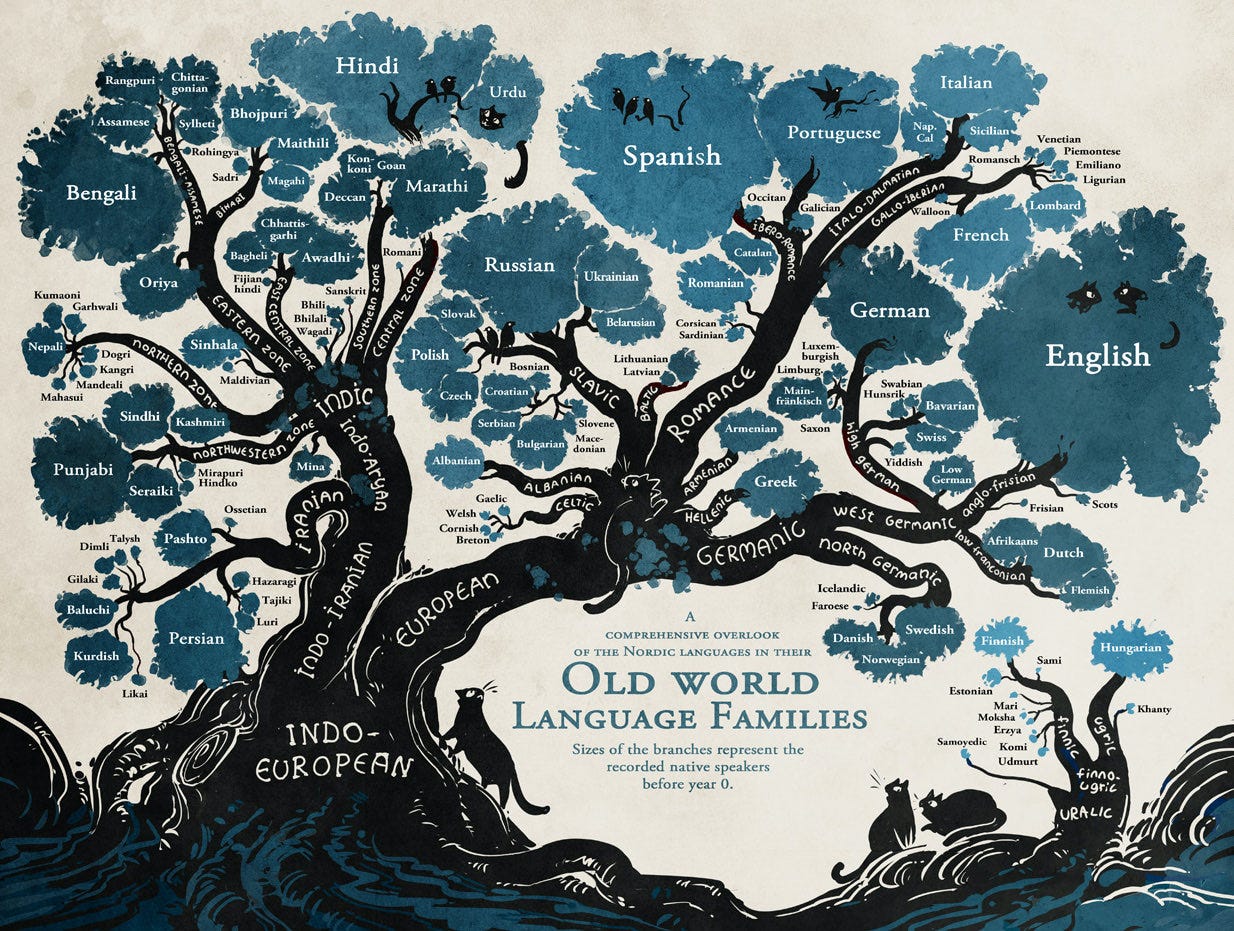
Conventional thinking often tells a specific story about when nations were “invented” and linear progression towards macro-political structures. I find myself on the other side of this conventional thinking that suggests nations are naturally old yet evolving entities. These thoughts were recently stimulated by Angelica Oung’s (of Taipology) Twitter post which juxtaposed European and Chinese historical developments. The following are my thoughts on a better way to think about these historical subjects.
The conventional definition and scope of “nationalism” is limited. One can easily map “modern” “nations” to historic language families. Like languages, nations are evolving, fluid, merging, and diverging entities but nonetheless are of substance, both materially and immaterially, which can be definitively categorized at points in time with a particular development history.
Modern historians find it convenient to erase the historical substance of nations in favor of an abstract dynastic system of monarchies that they suggest had nothing to do with the tenets we associate with the modern nationalisms. However, while complicated, there was a general coherence between a monarchy and a nation in early history. Thus, modern historians’ assertion that nations were invented in modernity is very dubious.
The Irish nation is perhaps the oldest consistent nation in Europe arising in its primitive form around 3000 to 2000 BC. The 17th century Annals of the Four Masters constructed the succession of Irish high kings (of the whole island) shortly after 2000 BC with the first being Sláine mac Dela. The last high king of Ireland was Rory O’Connor who died in 1198 AD. There was a final failed revival with Edward Bruce, brother of Robert the Bruce, who died in 1318 AD fighting a reconquista against the Normans/English.
While the Norman invasion and consolidation prevented Irish centralized state rule thereafter, the underlying Irish nation persisted. The lineage of Irish high kings shows clear evidence of continuity of Irish national particularity. This is why the remaining native Irish nobility kept writing to the Pope to defend their claims of sovereignty against the invading Normans/English on the basis of national particularity. In 1315 AD, Robert the Bruce wrote a letter to the native Irish nobility which stated:
“Whereas we and you and our people and your people, free since ancient times, share the same national ancestry and are urged to come together more eagerly and joyfully in friendship by a common language and by common custom, we have sent you our beloved kinsman, the bearers of this letter, to negotiate with you in our name about permanently strengthening and maintaining inviolate the special friendship between us and you, so that with God’s will our nation may be able to recover her ancient liberty.”
The explicit rationale used to critique the Norman invasion was that they were of a foreign “ancestry”, foreign “common language”, and foreign “common custom” not of “our nation.” This is nationalism describing a nation in a national struggle. It’s even more apparent because, at this time, the Catholic religion was shared amongst both peoples and thus differing religion can’t be used as a substitute factor. These events were well before modernity and especially the French Revolution which is when modern historians like to place the invention of nations.
This example shows, in general, nations and national affinity were intelligible for a very long time and were not “new”. Although, exceptions to the rule exist in terms of consolidating borderlands and complex population migrations and settlements. Therefore, one may be able to sufficiently critique some national constructions as artificial while it can’t do so with others. It’s an evolving dynamic just like language as said before which grants dynamism over static fossilization.
The modern trend of national revolutions followed by a construction of generally republican nation-states was not about people waking up one day and inventing a nation out of thin air. It can be better understood as a crisis of legitimacy of absolutist monarchies and petty feudal lords. These institutions which ultimately derived their legitimacy from the nation became more and more like detached oligarchs which married into each others’ foreign dynasties thus alienating themselves from their own nations.
Everyone forgets that the French Revolution villainized the French monarchy for being alien to the French nation. King Louis XVI was 80% ethnically German/Austrian and his wife was 100% Austrian. In his infamous trial, charges 9, 19, 20, 28, 31, and 33 all concerned his foreignness to France which was alleged to be the reason for his treasonous collaboration with the Germans/Austrians (who were fighting France at the time) by the French revolutionaries.
It is more accurate to see the modern period’s nationalist movements as the monarchs losing legitimacy (or Mandate of Heaven) leading to the need to replace them with republican nation-states. Thus, nationalism can be seen as a return to something older vs. the creation of something new, of course, accented by modern technology.
Older nations also contained more democratic processes than we conventionally think. Gaelic Ireland had tanistry, pre-Norman England had the witan, Germanic tribes had the thing, Celtic Gauls had the uergobretos, and the Slavic tribes had the veche. These were by no means 2026 AD western liberal ideals of universal suffrage democracy but, as seen from the very localized contexts in their own time, they are much more democratic than the polemical modernist histories about the usual hereditary authoritarians. In actuality, one could say the “monarch” was more like an elected president of distantly related clans who formed an assembly to vote for them. In the Irish case, it was more often that the previous king’s son was not elected as the next king. Ancient to classical national monarchies were more democratic than modernist historians would like us to believe. However, the medieval to modern era would be a transition away from that standard.
It was the Normans that led the shift away from this older democratic system to primogeniture which begins this stereotype of the narrow first born son hereditary monarchy that grows alienated and despotic from its nation. The 1215 AD Magna Carta (and its stimulus the First Barons’ War) was somewhat a counterrevolution to Norman despotism which demanded rights and a return to “witan”-esque checks and balances. But Normans be Normans.
Eventually, this snowball kept building across Europe. Then in 1492 AD Columbus discovered America and the subsequent “old imperialism” supercharged European monarchs to become absolutist, despotic, and oligarchic. Of course, there were exceptions of good monarchies. Some monarchies peacefully evolved and reformed towards republican states (see 19th century German statelets). This was not to say that the post-monarchy societies were perfect. The United Kingdom’s bourgeois republican oligarchy (with a stage-managed faux-monarch) was a monstrous plague on humanity. Alternatively, it’s likely the House of Stuart would have eventually become reformist if not for usurpers like Cromwell and William III.
Evidence for this suggestion is that the Stuart (and Catholic) King James II literally reformed and decentralized power in his lifetime, especially in Ireland. In return for Irish support, he planned for toleration of Catholicism, an end to the Penal Laws, a reverse of the land confiscations, and to enable political autonomy of the Irish Parliament. By 1689 AD, he had enabled a massive change in Irish Catholic freedom and representation across society. With the introduction of Irish Catholics into leadership in the courts, “the Gaelic poet David Ó Bruadair rejoiced that the Irish Catholics on the bench could now give justice to the natives.” Historian Tim Harris wrote, “there was a tendency among those engaged in the struggle against English hegemony to perceive the conflict in national terms: as a struggle to throw off English colonial domination and achieve autonomy and self-determination for the Irish nation.” But that didn’t happen. Instead, we got the modern imperial and oligarchic yet republican British Empire with all its crimes against humanity.
Finally, based on Angelica’s comments on the nature of decentralization and centralization of political unity amongst nations or within a civilization, I believe the capacity and scope of political unity is dependent on legitimacy and Spenglerian/Toynbeean life cycles. Decentralization or centralization are not inherently bad or good. They ebb and flow like ocean waves. At times, good and, at times, bad. The cycle of this feedback loop is what transitions periods from centralization to decentralization to centralization and back again which is mixed in with all the messy fluidity of the evolution of languages and nations as discussed above.
The natural entity above the nation is the civilization. Since China was more advanced than Europe earlier, China was able to reach a unified civilizational manifestation before Europe. Since, Europeans all draw on a common Steppe Indo-European root origin proto-culture (with assimilation of pre-existing Anatolian agricultural culture in Europe), each primitive nation and/or language family developed towards their own manifestation of this collective civilization.
The most advanced being the Hellenic civilization of the Greeks which evolved/merged into the Latin civilization of the Romans which evolved into Christendom (peak European civilization). The other less advanced manifestations (in order) included Celtic civilization and Germanic/Slavic civilizations. They competed with Latin-Hellenism and were ended, merged, or marginalized. Celts, while less developed, had pan-tribal Druidic general assemblies in Gaul and an education center in Briton showing evidence of a greater unity across the Celtic sphere.
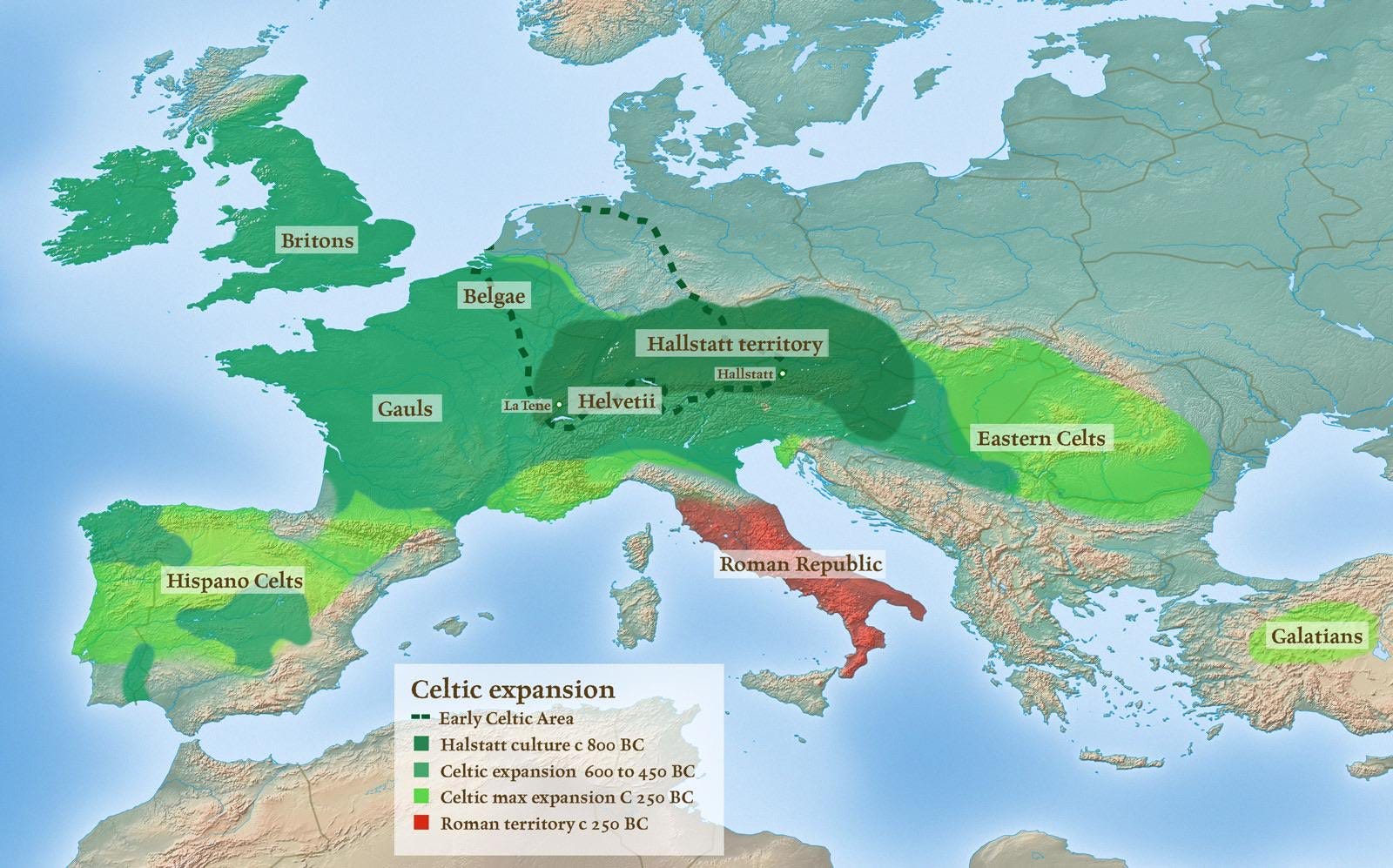
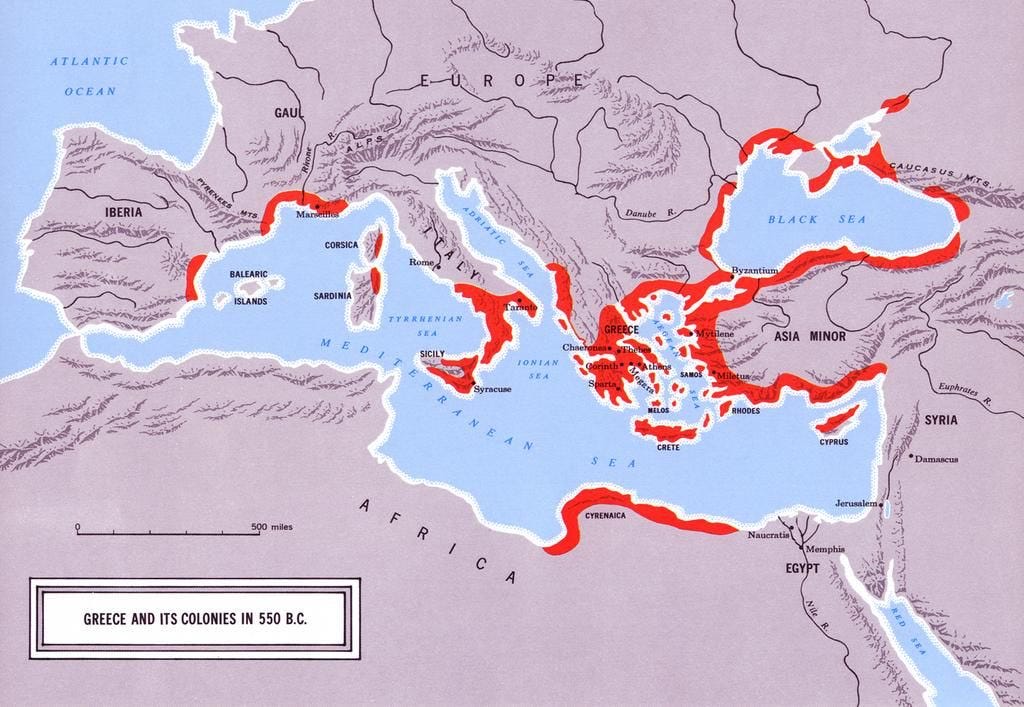
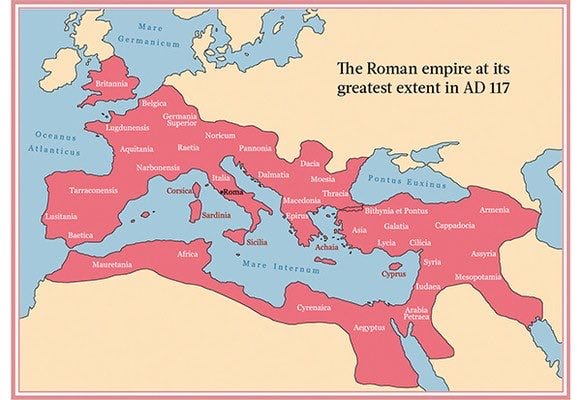
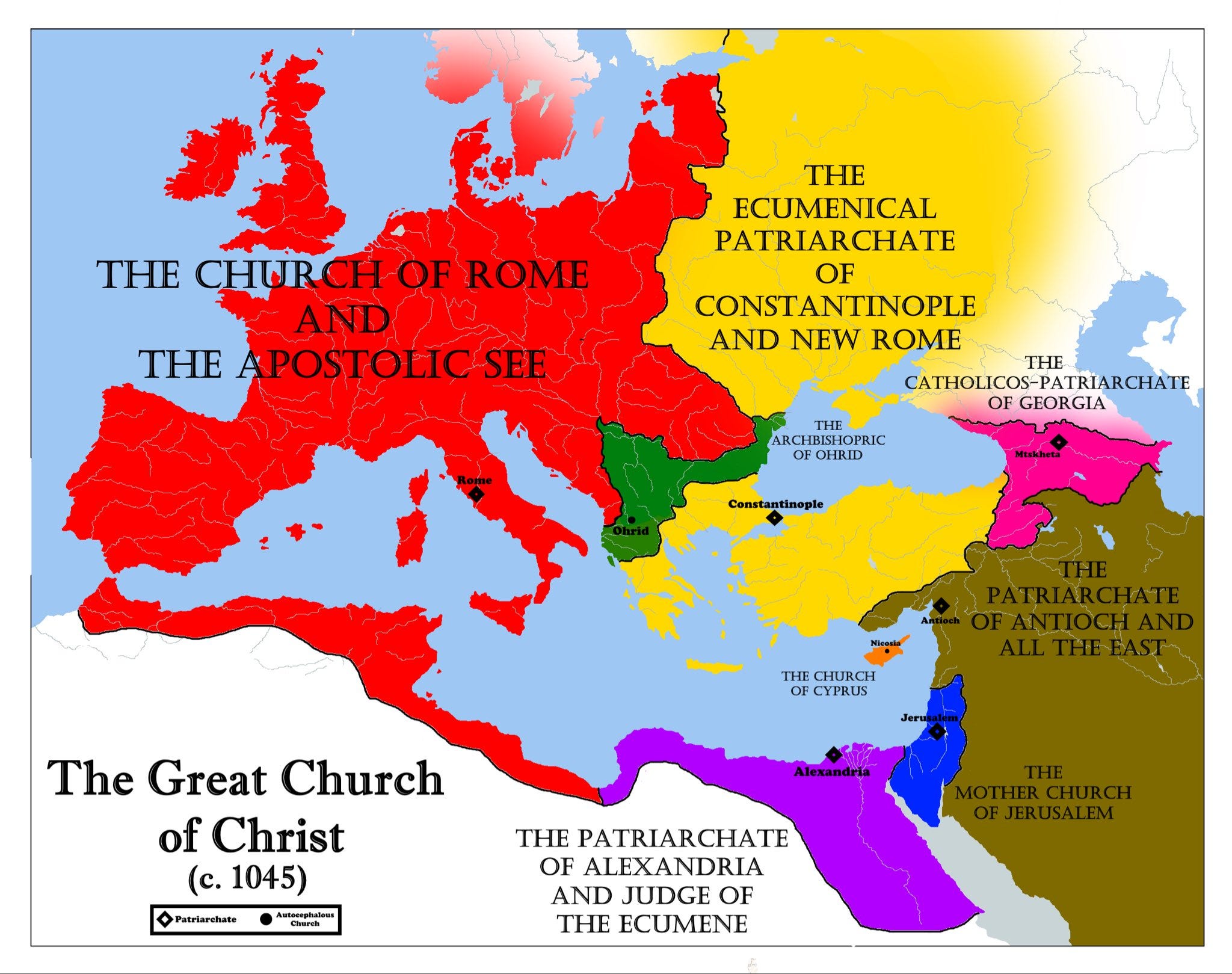
Speaking very generally, the spiritual Roman Catholic Pope (and to some extent his temporal Emperor) took on a similar form to that of the Chinese emperor (nuances of course). So one could see European civilization as most centralized right before the 1054 AD East-West schism. It had a common centralized religious institution that enveloped political structures and a lingua Franca in Latin. There’s a discussion to be had about unintelligible dialects in China and unintelligible languages in Europe as revealing a similar hierarchy. Could European languages be considered dialects and thus nations equal to regions?
Of course, the Byzantine schism, Protestantism, the English, and so forth all decentralized this European unity in the preceding years. This eventually led to absolutist monarch and petty feudal lord oligarchies which needed to be decentralized by the liberal and romantic nationalists. The 19th century Concert of Europe and English imperialism (later American) froze Europe into the decentralized status quo we see today. However, the ebb and flow back towards centralization could be seen in things like Friedrich List’s world trade congress and idealist visions of the League of Nations (albeit jumping to global scope). List and others saw how legitimate nations could rebuild into a centralized structure. But, because things were not existential, European nations became comfortable and stagnated.
However, 19th to 20th century China was all about existential crises. This era was de facto decentralized despite its nominal empire because of lack of capacity of the Qing dynasty, rebellions like the Taiping, and foreign imperialists carving out territory. The only way for China and its constituent diversity of identities to survive was by moving from a period of decentralization to centralization. One cannot understand mid-20th century China without understanding 19th century China.
Europe’s modern period was premised on the exact opposite. Perhaps, if China decentralized earlier (i.e. away from the waning Qing capacity), then it could have recentralized faster before the Europeans and the Japanese could get their hooks in. But who knows. Perhaps, Europeans should have stayed Catholic.
This explains why we see what we do today between Europe and China. It’s not because a given ideology commands centralization or decentralization, but because historical contingencies unfolded in specific contexts and non-overlapping timings of the ebbs and flows. Hopefully, conventional thinking can change to see nations less as new and artificial and more as old and natural. It was only in the medieval to modern era transition that the connection between nation, democracy, and monarchy went astray. Only when this real substance of history is understood can a legitimate civilizational structure be built to incorporate legitimate nations. Today, with the individual European nations faced with the giants of America and China, it would be important to consider this.